BFM Business - C'est votre argent

War in Iran, central banks, and markets on the agenda for “C’est votre argent”

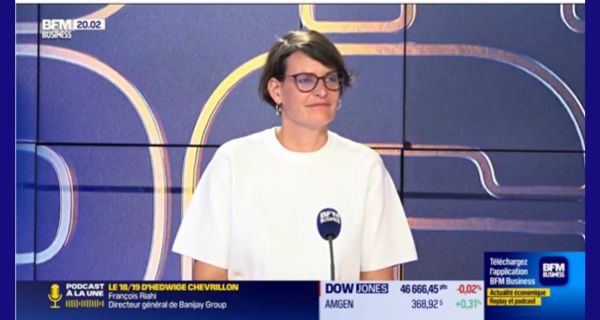
On the “C’est votre argent” program broadcast on BFM Business and hosted by Marc Fiorentino, the discussion focused on the economic and financial consequences of the war in Iran, global growth prospects, changes in monetary policy, and market reactions.

The panel included Léa Dauphas, chief economist at TAC Economics, Céline Piquemal-Prade, Eric Bleines, and Wilfrid Galand. The panelists shared their analyses on geopolitical risks, equity markets, central banks, and economic outlooks.

A Geopolitical Context That Has Become Central to the Markets

At the start of the program, Marc Fiorentino noted that financial markets had so far appeared to absorb various geopolitical shocks relatively quickly. The discussion then turned to the potential consequences of the Iranian conflict on energy prices, inflation, and global growth.

Léa Dauphas explained that the scenarios developed by TAC Economics were regularly adjusted based on the conflict’s evolution and diplomatic announcements. She noted that, at this stage, the preferred scenario remained one of continued tensions without a major disruption to the global economy. She nevertheless emphasized that, at this stage, the central scenario remained one of the conflict’s “persistence” without a shift toward a global systemic crisis. In the economist’s view, the markets have so far shown a certain degree of composure, despite the mounting risks.

This resilience can be attributed to several factors, notably:

  • the absence of a major disruption in the global energy supply;
  • the relative strength of the U.S. economy;
  • central banks that remain credible in their fight against inflation;
  • financial markets that are now accustomed to quickly pricing in geopolitical shocks.


Léa Dauphas, however, emphasized that this resilience remains fragile. In her view, the global economy is now operating in an environment where geopolitical risks are becoming structural rather than exceptional.

Several speakers noted that markets remained relatively stable despite the context. Eric Bleines specifically mentioned investors’ ability to absorb geopolitical crises more quickly than before, while Wilfrid Galand emphasized that markets continued to focus primarily on U.S. growth and central bank decisions.

Risks Related to Energy and Inflation

A significant portion of the discussions focused on energy risks. Speakers noted that any sustained disruption to oil supplies could reignite inflationary pressures.

Léa Dauphas noted that the main area of concern was the trend in energy prices and their indirect effects on production costs and global trade. She also pointed out that geopolitical tensions were becoming a persistent economic factor.

Discussions also addressed the ability of central banks to respond in a context where inflationary risks and slowing growth coexist.

Central Banks: Between Caution and a Wait-and-See Approach

The guests discussed the upcoming decisions by central banks, particularly the U.S. Federal Reserve.

Léa Dauphas noted that central banks must now incorporate geopolitical risks more fully into their macroeconomic analyses. She emphasized that markets sometimes anticipate rate cuts too quickly.

Wilfrid Galand emphasized that central banks remain dependent on economic data, particularly trends in core inflation and U.S. employment.

Eric Bleines, for his part, believed that markets continued to hope for a scenario of moderate slowdown allowing for gradual monetary easing.

Economic Fragmentation and Geopolitical Realignment

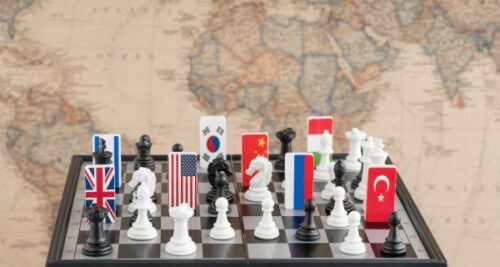
Discussions also addressed shifts in the global balance of power, particularly relations between the United States and China.

This topic was addressed in the segment on the week’s “top/flop,” based on an ISEAS survey indicating that 52% of countries in the region would now prefer to align with Beijing rather than Washington.

Léa Dauphas explained that this shift is part of a broader trend toward the fragmentation of the global economy. In her view, companies must now take into account issues of industrial sovereignty, supply security, and diplomatic realignments.

The speakers emphasized that this shift has direct implications for investment strategies and international value chains.

Markets Remain Resilient

Despite geopolitical tensions, equity markets have shown relative resilience in recent weeks.

Several speakers noted that investors are now better able to distinguish between temporary shocks and risks that could trigger a genuine economic breakdown.

Léa Dauphas noted that this resilience remained contingent on the conflict not spreading regionally and on the stability of energy markets.

Discussions also focused on global growth prospects. Speakers described an environment marked by a gradual slowdown but without any immediate scenario of a global recession.

Receive the latest news

Subscribe To Our Newsletter