Emerging Markets
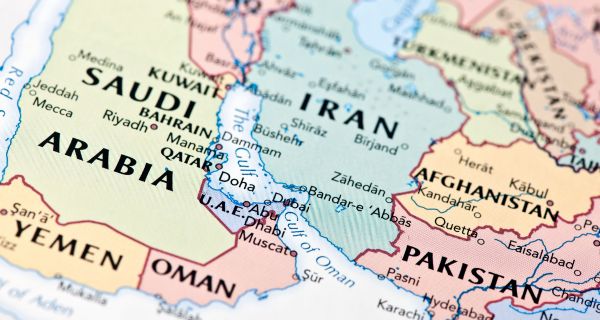
As the conflict between Iran, Israel, and the United States drags on, companies and investors with exposure to the Middle East must navigate an increasingly uncertain environment. Beyond military operations, disruptions to energy flows, the prolonged closure of the Strait of Hormuz, and regional geopolitical realignments are reshaping the economic balance in the Gulf.
During our latest webinar, the TAC ECONOMICS team analyzed the key geopolitical and macroeconomic risks associated with this crisis. Here are the main takeaways.
After several months of clashes and reciprocal strikes, the prospects for a rapid resolution of the conflict have faded. Diplomatic negotiations remain open but fragile, while the objectives of the various parties remain largely incompatible: Iran’s nuclear program, Iran’s regional role, the sanctions regime, and free maritime passage through the Strait of Hormuz.
In this context, our baseline scenario remains that of a protracted conflict of varying intensity, characterized by:
The scenario of a rapid return to normalcy remains possible, but its likelihood has decreased significantly since the start of the crisis. Conversely, a scenario involving a major breakdown with massive destruction of energy infrastructure is not currently our baseline assumption.
The Strait of Hormuz remains one of the main strategic chokepoints for global energy trade. Before the conflict, nearly 20 million barrels of oil passed through it daily.
Although some bypass capacity exists thanks to Saudi and Emirati infrastructure, the current disruptions are affecting:
This situation illustrates a reality that is often underestimated: the economic consequences of a conflict are not limited to the areas directly affected but spread throughout global trade, industrial, and energy networks.
To measure economies’ exposure to conflict, TAC ECONOMICS has developed a sensitivity indicator incorporating several dimensions:
The results reveal significant disparities among countries.
The economies of the Middle East and North Africa are, unsurprisingly, among the most exposed. However, certain Asian economies heavily dependent on hydrocarbon imports from the Gulf, such as South Korea and Thailand, also exhibit significant vulnerability.
Even within the Gulf region, situations vary significantly depending on the economic and financial resilience of individual states.
The crisis has profoundly disrupted energy markets.
Despite the existence of strategic reserves and a global production surplus accumulated in recent months, oil prices remain persistently high. In our baseline scenario, Brent is expected to continue trading within a range of $100 to $120 per barrel, with episodes of high volatility.
Gas markets are also under pressure. Several infrastructure facilities have been damaged, affecting a significant portion of global liquefaction capacity.
For businesses, the consequences are manifold:
One of the key takeaways from our analysis concerns the growing divergence among the major Gulf economies.
Despite regional tensions, Saudi Arabia still benefits from several favorable factors:
Rising oil prices partially offset the decline in export volumes, allowing the Kingdom to preserve its economic flexibility.
The United Arab Emirates now finds itself in a more complex situation.
Admittedly, its economic diversification is the most advanced in the region. However, the conflict calls into question its historical positioning as a stable, secure, and attractive platform for international investment.
Since Iranian strikes directly targeted Emirati territory, the geopolitical risk associated with the country has increased significantly.
This development could, in the medium term, affect the attractiveness of the Emirati model to international investors and talent.
Beyond the current crisis, the conflict serves as a barometer of deeper dynamics.
The Middle East remains a heavily militarized region where several regional powers are seeking to strengthen their influence:
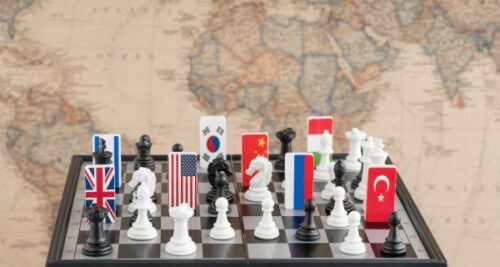
At the same time, the major world powers—the United States, China, Russia, and the European Union—continue to defend their strategic interests there.
This competition is reflected in:
The rivalry between Saudi Arabia and the United Arab Emirates is now one of the main factors shaping regional geopolitics.
The economic diversification ambitions pursued by the Gulf states are also creating new forms of competition.
Tourism, finance, logistics, international trade, and air transport: national strategies are converging on similar sectors, fueling growing geo-economic rivalry.
This competition could gradually result in:
For foreign companies, decisions regarding where to locate or with whom to partner could become increasingly sensitive from a geopolitical perspective.
Three key messages emerge from our analysis:
In this context, risk assessment can no longer be solely national in scope. It must incorporate regional dynamics, sectoral dependencies, and geopolitical realignments that are gradually reshaping the balance of power in the Middle East.