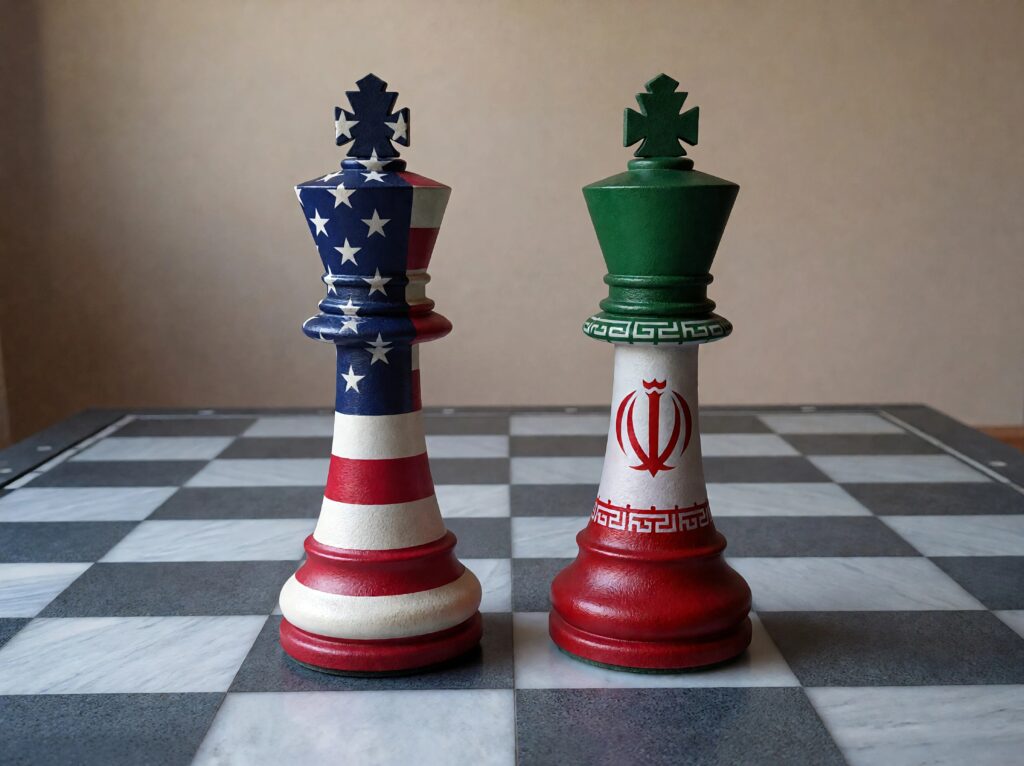
The outbreak of the Iranian conflict in February 2026 triggered one of the most severe disruptions to global energy markets since the 1973 oil crisis. With the effective closure of the Strait of Hormuz, a critical chokepoint through which around 20% of global oil supply transits, oil prices surged dramatically, rising from about USD 60 per barrel in late 2025 to peaks above USD 110 by March 2026.
This shock immediately raised a fundamental question for policymakers and market participants alike: how will such a disruption propagate through the global economy?
A recent working paper by TAC ECONOMICS provides a detailed and rigorous answer. Using a Bayesian Global Vector Autoregressive (BGVAR) model covering 14 major economies, the study quantifies the macroeconomic consequences of this oil shock across growth, inflation, and monetary policy.
Unlike traditional country-by-country approaches, the BGVAR framework explicitly captures the interconnected nature of the global economy. Each country is modeled not in isolation, but as part of a network linked through trade and financial channels.
The model includes both advanced economies (United States, euro area, United Kingdom, Japan) and major emerging markets (including China, India, Brazil, and Russia), representing roughly 75% of global GDP.
A key methodological choice is to treat oil prices, specifically Brent crude, as an exogenous global variable. This allows the model to isolate the pure effect of the geopolitical shock, independent of endogenous demand dynamics.
The analysis highlights three major channels through which the oil shock spreads globally:
1.Inflation: Rapid but Uneven Pass-Through
The oil shock generates an almost universal increase in inflation. However, the magnitude varies significantly across countries.
Structural factors, such as energy dependence, subsidy regimes, and exchange rate sensitivity, play a crucial role in shaping these differences.
The impact on economic growth is predominantly negative, especially for oil-importing economies.
In contrast, oil-exporting countries such as Russia initially benefit from higher revenues. However, these gains tend to fade over time as global demand weakens.
Central banks generally exhibit a tightening bias in response to rising inflation, particularly in emerging markets.
However, for a moderate oil shock, the estimated rate increases remain limited, often below the threshold of a standard policy move.
The real challenge emerges when the shock persists, forcing central banks to choose between controlling inflation and supporting growth.
To account for uncertainty surrounding the conflict, the study develops three scenarios based on different oil price trajectories:
Scenario 1: Normalization
A rapid de-escalation leads to a temporary spike in oil prices, followed by stabilization. The macroeconomic impact remains limited, with only short-lived inflation and modest growth effects.
Scenario 2: Persistence
A prolonged disruption keeps oil prices elevated for several quarters. In this case, second-round effects emerge:
For example, cumulative inflation in the United States rises to around 1.4 percentage points, while growth losses intensify across major economies.
Scenario 3: Breakdown
A severe escalation involving destruction of energy infrastructure pushes oil prices to extreme levels (up to USD 160 per barrel).
This scenario produces a full stagflationary shock:
China’s GDP, for instance, could decline by up to 2.6 percentage points cumulatively, while inflation spikes globally.
One of the most important findings of the paper is that the duration of the shock matters more than its initial magnitude.
A disruption lasting one quarter remains manageable. But once it extends beyond that threshold, the economic impact increases disproportionately. This is because expectations adjust: firms and households begin to treat the shock as persistent, triggering second-round effects in wages and prices.
The study provides several key takeaways for policymakers:
The 2026 Iranian oil shock illustrates the importance of global interdependencies in shaping economic outcomes. By capturing trade linkages and cross-country spillovers, the BGVAR framework reveals a critical insight: in a deeply interconnected world, no economy is insulated from large geopolitical shocks.
Ultimately, the difference between a manageable disruption and a global stagflationary crisis depends less on the initial shock itself than on how long it lasts—and how economic agents respond to it.
.