Economie globale
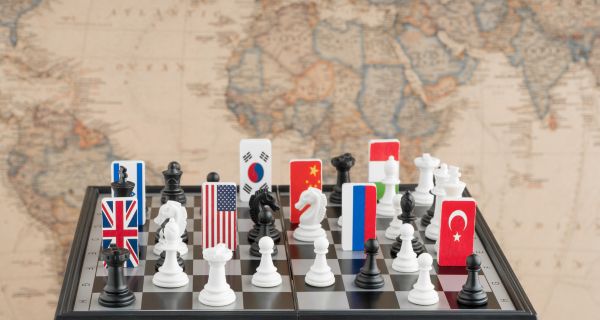
For decades, country-risk assessment has been built around a relatively clear distinction between domestic vulnerabilities and external geopolitical threats. Political instability, weak institutions, fiscal fragility, and governance shortcomings were analyzed separately from international tensions, trade disputes, or regional conflicts.
Today, that distinction is rapidly disappearing.
As geopolitical competition intensifies and economic coercion becomes an increasingly common tool of statecraft, domestic governance weaknesses and geopolitical exposure are becoming deeply interconnected. For businesses, investors, and financial institutions operating in emerging markets, understanding this interaction has become essential to accurately assess risk and build resilience.
Emerging markets with fragile institutions, limited fiscal capacity, or opaque business environments tend to be significantly more exposed to external geopolitical shocks.
The reason is straightforward: weak governance reduces a country’s ability to anticipate, absorb, and respond to crises.
When a geopolitical disruption occurs—whether through sanctions, trade restrictions, supply-chain interruptions, commodity price shocks, or regional conflicts—countries with robust institutions can often deploy effective policy responses. Those with weaker governance frameworks face greater difficulties in managing the consequences, leading to longer-lasting economic and financial disruptions.
This creates a powerful risk multiplier. Geopolitical tensions no longer represent purely external threats; they interact directly with domestic vulnerabilities and can quickly transform into operational, financial, and political challenges.
Recent analysis conducted by TAC ECONOMICS highlights a strong correlation between Political Risk Premiums and our proprietary GeoPolitical Sensitivity Index (GPSI).
Countries displaying elevated geopolitical sensitivity frequently share common characteristics:
In these environments, geopolitical events can trigger rapid deterioration in business conditions through rising inflation, currency volatility, capital outflows, social unrest, or regulatory instability.
The result is a much broader risk profile than traditional country-risk assessments may suggest.
Another major development is the growing use of economic leverage as a geopolitical instrument.
Strategic powers increasingly use trade relationships, access to natural resources, infrastructure financing, technology transfers, and investment flows to advance geopolitical objectives. Countries with weaker governance structures are often more vulnerable to such pressures.
This dynamic can create:
For international companies, these pressures can directly affect supply chains, investment projects, market access, and long-term business planning.
The global geopolitical landscape is also being transformed by evolving US domestic and foreign policy priorities.
The growing emphasis on strategic competition, resource security, and transactional diplomacy has introduced additional uncertainty into international relations. Traditional alliance structures are under pressure, while economic and security relationships are becoming increasingly fluid.
For emerging markets, this evolution creates a more complex operating environment.
Countries that depend heavily on global trade, external financing, or strategic partnerships may face greater exposure to sudden policy shifts, sanctions risks, or changes in international cooperation frameworks.
At the same time, businesses must navigate a world where geopolitical alignment increasingly influences market access, financing conditions, and regulatory expectations.
These developments highlight a critical challenge for risk professionals: assessing governance risk and geopolitical risk separately is no longer sufficient.
A country with relatively stable macroeconomic indicators may still face elevated risk if its governance framework limits its ability to respond to external shocks. Conversely, geopolitical tensions may have limited economic consequences in countries with strong institutions and effective policy tools.
This growing interdependence requires a more integrated approach to country-risk analysis—one that simultaneously evaluates domestic governance quality, geopolitical exposure, institutional resilience, and international alignment.
As geopolitical fragmentation accelerates and global power competition intensifies, the interaction between governance and geopolitics will continue to shape the risk landscape across emerging markets.
For businesses, investors, and financial institutions, understanding these interconnected dynamics is becoming a strategic necessity rather than an analytical luxury.
At TAC ECONOMICS, our Political Risk Premium framework and GeoPolitical Sensitivity Index (GPSI) are designed precisely to capture these evolving interactions, helping decision-makers identify vulnerabilities, anticipate disruptions, and strengthen resilience in an increasingly complex world.
In today’s environment, country risk is no longer simply about what happens inside a country’s borders—or beyond them. It is increasingly about the interaction between both.